
For most Indians, Zomato’s relationship spans even before you actually start being hungry. Interactions could range from amusing push notifications from Zomato asking if you have made up your mind for lunch, or an amusing meme on Zomato’s Instagram. Zomato has evolved beyond a food delivery app and is embracing the role of a digital marketing company, and has learned how to stay “top of mind” in the business of food delivery in an era of quickly diminishing attention spans.
With 20 million followers across all platforms, Zomato’s social media presence is a testament to the fact that social media is not about selling food, but about selling a lifestyle. Zomato has a goal of selling a lifestyle so compelling that even the uninterested in ordering food become engaged with their content. What is Zomato’s secret?
Here are the 5 marketing secrets that make Zomato the undisputed king of Indian social media.
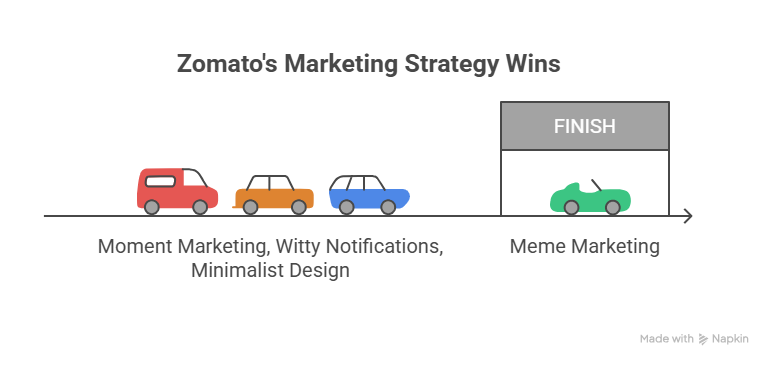
1. The Power of “Relatable” Meme Marketing
Zomato was one of the first brands in India to break away from the typical, polished, corporate ads and lean into the messy, chaotic world of memes. When Zomato does memes, they don’t just ‘post’ memes, they ‘speak’ meme.
Zomato knows how to insert themselves into the meme, whether it’s a meme from a new Netflix show or a relatable struggle about ‘Mummy’s cooking vs. outside food.’
The Secret: Shareability over Sales. Zomato does massive organic reach by making content that customers want to send to their friends in a DM. For example, Zomato creates the type of content that gives the brand friend status, while simultaneously making the act of ordering food a natural extension of that friendship.
2. Exemplary Moment Marketing
Zomato has mastered Moment Marketing, which is the art of using real-time events, news, and trends as a way to stay relevant. In the world of digital marketing, when it comes to ‘timing’ things, Zomato does it better than anyone else.
Whether it is on JCB Ki Khudayi or the IPL Finals or the Academy Awards, Zomato is among the fastest advertisers to creatively engage with a trend, keeping them relevant and in the spotlight. Zomato avoids the delay associated with the approval process in order to create trend timely content.
The company’s endorsement of digital trend responsive advertising stems from their appreciation of risk taking and acting with little or no prior approval in order to advertise in a manner that is relevant and current to their audience.
The Netflix Strategy: How a DVD Rental Store Became a Global Streaming Giant
3. Turning Push Notifications into “Micro-Content”
While many apps utilize notifications to advertise a promotion or a limited time offer, Zomato uses the screen like a micro-content advertising method.
It is intended to seem like a message from a close friend. Something like, “Tu thoda sa late hai, par lunch abhi bhi wait kar raha hai” is a means of interaction with the audience in an example, while it is intended to seem like a friendly reminder.
The Secret: Personalization and Emotional Hooks. Zomato utilizes its understanding of an individual user and even their emotions. Zomato has added some humor and some local language (Hinglish) to what was generally considered a spam feature, and has actually turned it into a positive experience. This has resulted in much higher AOR (app open rate) for their users.
4. The “Minimalist” Design Language
For Zomato’s Instagram, you will not see cluttered spam posts with merchandising like 50% off. Instead, they will use a simple minimalist design, like a background in their signature red color with 5 words or a poster of the food item.
The “less is more” design stands out from other posts, is clean and recognizable.
The Secret: Brand Recall. Their dominant use of a color palette (Zomato Red) and one of a small number of popular font types, means that you can easily identify the brand – you don’t even have to see it written to know it’s a Zomato post. This is an important factor leading to their remarkable digital identity.
5. Community Engagement & “Witty” Customer Service
Zomato has mastered the art of witty replies on social media. Their reputation for quick responses that are even better than the tweet they are replying to has garnered the attention of the platform. They respond to trolls, give shout outs to fans, and even engage in “friendly rivalry” with other companies, like Swiggy.
Every reply, joke, and comment on social media adds a personal touch and creates rapport with Zomato.
The trick? They respond to customers. Zomato is one of the few companies to realize social media isn’t a billboard to promote your business. The more comments a post receives, the more the post is promoted in the feed due to the algorithm, which fosters a “Community” of people who defend, promote, and engage with a business for no pay.
Conclusion: The Zomato Lesson for Brands
In 2026, social media is about understanding your audience. Zomato’s success shows that. In doing so, they have become so much more than a utility app; they have become a cultural icon, and, for many people, have become synonymous with delivery.
Mastering Brand Management: Building and Sustaining a Strong Brand Identity
Key Takeaways for Your Brand:
- Don’t be a Brand, be a Person: Use humor and relatability to connect.
- Timing is your Best Friend: Leverage trends while they are fresh.
- Optimize the Small Stuff: Even a push notification is a marketing opportunity.
- Consistency is Key: Build a visual identity that doesn’t need a logo to be recognized.
- Talk with Them, Not At Them: Engage in the comments to build a community.
Zomato has gone beyond mastering the food delivery business. They have redefined the digital marketing business in the 21st century. The next time you receive a notification from them, do not just pay attention to the food. Instead, appreciate the brilliance at work.
👨💼 Author: BBAProject Editorial Team
✍️ The BBAProject Editorial Team comprises business graduates and educators dedicated to creating practical, syllabus-based learning resources for BBA students.
⚠️ Please Note: Articles published on BBAProject.in are well-researched and regularly updated. However, students are advised to verify data, statistics, or references before using them for academic submissions.