
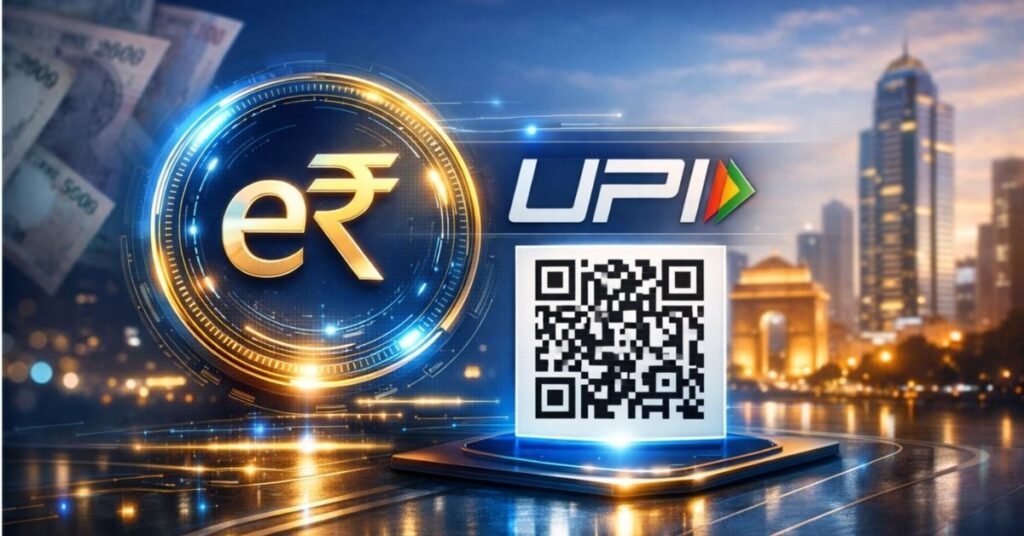
The Silent Revolution: How India is Redefining Money
India stands at the forefront of a global digital payment revolution. From street vendors accepting QR codes to seamless online transactions, the way Indians interact with money has transformed dramatically. At the heart of this transformation are two powerful forces: the ubiquitous Unified Payments Interface (UPI) and the emerging Central Bank Digital Currency (CBDC), or the Digital Rupee. As these digital behemoths gain traction, a critical question arises: Is this the beginning of the end for physical cash in India? This article delves into the nuances of these financial innovations, their impact, and what the future holds for India’s monetary landscape in 2026.
UPI: The Unstoppable Force That Changed Everything
Launched in 2016, the Unified Payments Interface (UPI) has become synonymous with digital payments in India. It is an instant real-time payment system developed by the National Payments Corporation of India (NPCI) that facilitates inter-bank peer-to-peer and person-to-merchant transactions [2]. Its simplicity, interoperability, and 24/7 availability have made it a runaway success, driving financial inclusion and digital literacy across the nation. UPI’s key features include instant payments, enabling real-time fund transfers; broad interoperability, allowing it to work across various banking apps and payment platforms; and its reliance on QR codes for easy scan-and-pay functionality. This has led to its high adoption rate, with billions of transactions processed monthly, and solidifying its position as a cornerstone of India’s digital economy.
Enter the Digital Rupee (CBDC): India’s Sovereign Digital Currency
While UPI revolutionized digital payments by streamlining transactions, the Digital Rupee (e₹) represents a more fundamental shift in the nature of money itself. Introduced by the Reserve Bank of India (RBI) as its Central Bank Digital Currency (CBDC), the e₹ is a legal tender issued in digital form [1]. Unlike volatile crypto currencies, it is a sovereign currency directly backed by the central bank, offering the same safety and trust as physical cash. The RBI’s objectives for introducing the Digital Rupee are multifaceted, aiming to reduce the operational costs associated with managing physical cash, further boost the digital economy by accelerating India’s transition to a cashless society, and encourage financial innovation by fostering new payment solutions and technologies. Furthermore, the CBDC provides the RBI with a new instrument for monetary policy implementation, enhancing its ability to manage economic stability.
Digital Rupee vs. UPI: A Tale of Two Digital Titans
It is common to confuse the Digital Rupee with UPI, but they serve distinct purposes and operate differently. UPI is primarily a payment system that facilitates transactions using existing bank accounts, acting as a digital highway for funds. In contrast, the Digital Rupee is the currency itself, issued directly by the central bank, akin to a new type of vehicle that can travel on this highway. The table below highlights their key differences:
| Nature | Payment System / Infrastructure | Digital Currency (Legal Tender) |
| Issuer | NPCI (facilitated by banks) | Reserve Bank of India (RBI) |
| Underlying Asset | Bank Deposits (Fiat Currency) | Direct Liability of RBI (Digital Fiat) |
| Anonymity | Limited (transactions linked to bank accounts) | Potentially higher for retail CBDC (design dependent) |
| Offline Capability | Limited / Emerging | Designed for potential offline transactions |
| Use Case | Retail payments, P2P transfers | Retail payments, wholesale transactions, cross-border payments |
The End of Cash? A Nuanced Perspective for 2026
With the rapid adoption of UPI and the introduction of the Digital Rupee, the question of physical cash’s demise is more pertinent than ever. While India is undeniably moving towards a less-cash economy, completely eliminating physical currency by 2026 seems unlikely. Several factors contribute to this nuanced reality. A significant portion of India’s population, particularly in rural areas, still relies on cash due to limited access to smartphones, internet connectivity, or digital literacy, highlighting ongoing challenges in financial inclusion. Furthermore, for many, cash offers a level of anonymity that digital transactions cannot fully replicate, a factor that remains important in various social and economic contexts. Cultural habits also play a role, as cash transactions are deeply ingrained in Indian culture, from small daily purchases to traditional ceremonies. Lastly, despite advancements, a digital divide persists, making a complete transition challenging without universal access and education.
However, the combined force of UPI and the Digital Rupee will undoubtedly reduce the dominance of physical cash. We can expect a future where digital transactions become the primary mode, with cash serving as a supplementary option for specific use cases and demographics. This transition will be gradual, reflecting the diverse socio-economic fabric of India.
Why Middle-Class Indians Feel Poorer Despite Higher Income
Implications for Future Businesses and Management Students
For management students, understanding the interplay between UPI and the Digital Rupee is crucial. These developments are not just about technological advancements; they represent fundamental shifts in financial systems, consumer behavior, and business models. The growth of digital payments creates immense opportunities in fintech, product management, and digital strategy roles, offering new career paths. Businesses must adapt their payment infrastructure, marketing strategies, and customer service to cater to a predominantly digital payment ecosystem. Students will also need to engage in economic analysis, studying the macroeconomic impacts of CBDCs on inflation, monetary policy, and international trade. Moreover, new digital currencies introduce new risks related to cybersecurity, data privacy, and regulatory compliance, making risk management a critical skill for future professionals.
The “Blinkit” Effect: How Quick Commerce is Redefining Indian Consumer Psychology in 2026
Conclusion: A Digital Future, Not Necessarily a Cashless One (Yet)
The journey towards a truly cashless India is complex and multifaceted. While UPI has laid a robust foundation for digital payments and the Digital Rupee promises a new era of sovereign digital currency, physical cash will likely coexist, albeit in a diminished role, for the foreseeable future. For students and professionals in 2026, embracing these digital transformations is not just an option but a necessity to thrive in India’s evolving economic landscape. The future of money in India is undoubtedly digital, but the complete disappearance of cash remains a distant, rather than immediate, prospect.
References: [1] Reserve Bank of India – Central Bank Digital Currency (CBDC): https://www.rbi.org.in/Scripts/BS_PressReleaseDisplay.aspx?prid=54404 [2] National Payments Corporation of India (NPCI) – UPI: https://www.npci.org.in/what-we-do/upi/product-overview